PNEUMATIC SIMPLE MACHINES
Other Chapters
INTRODUCTION TO HYDRAULICSHYDRO KINEMATICSFLOW THROUGH PIPESIMPACT OF JETWATER TURBINESPUMPSHYDRAULIC VALVES AND SEALSHYDRAULIC SIMPLE MACHINESHYDRAULIC ACTUATORSHYDRAULIC CIRCUITS AND ACCESSORIESPNEUMATIC SIMPLE MACHINES
- Q1: Define Pneumatics.Ans: Pneumatics is the branch of engineering that deals with the use of compressed air or gas to produce mechanical motion. It uses pressurized air to do useful work in machines and tools.
- Q2: What is a Simple Pneumatics Machine?Ans: A simple pneumatic machine is a device that uses compressed air to perform a specific task. It works by converting the energy of compressed air into mechanical movement. Examples include air pumps and small air-operated tools.
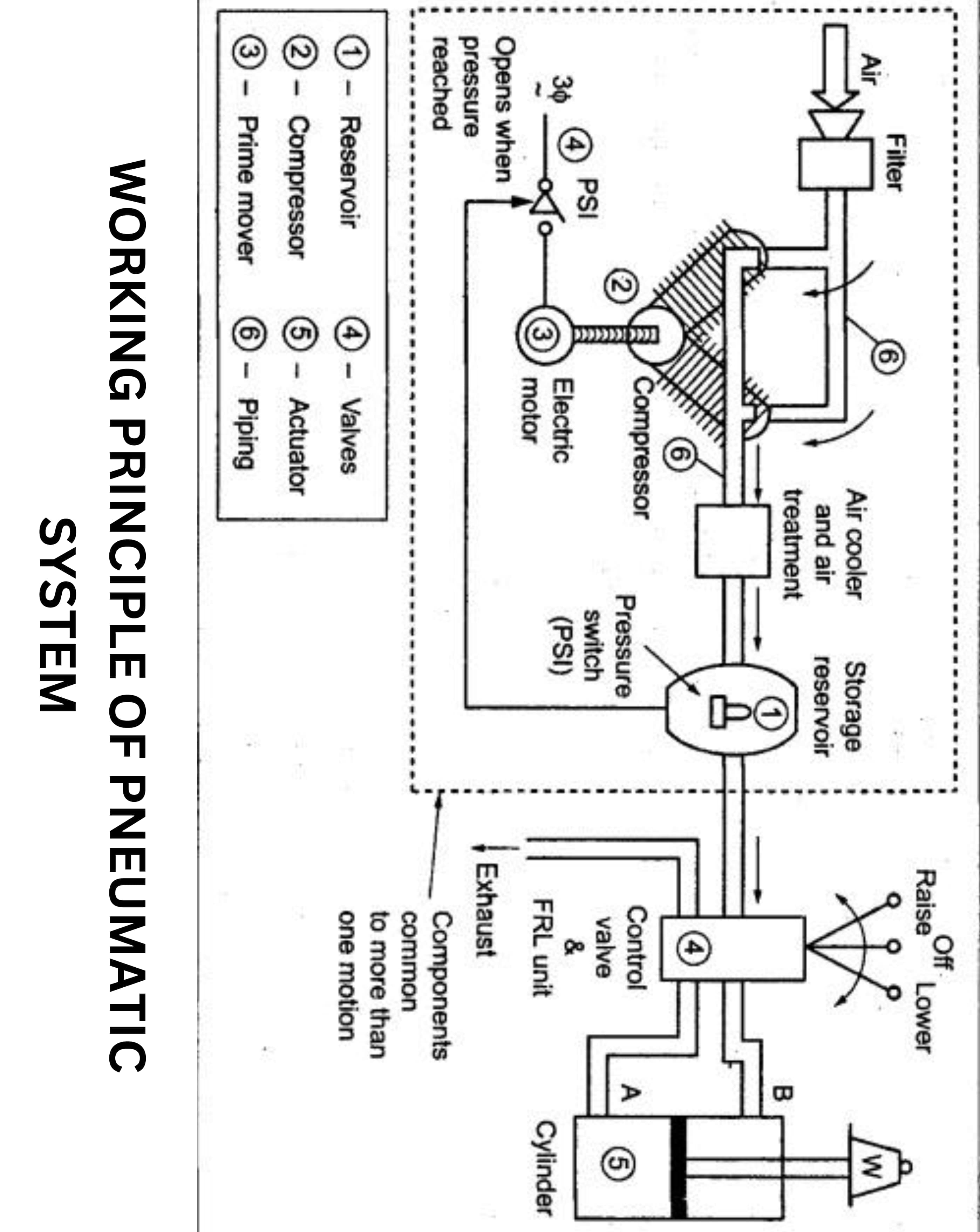
- Q3: What is a Pneumatics System?Ans: A pneumatic system is a system that uses compressed air to transmit and control energy. It consists of different components like a compressor, pipes, valves, and actuators. The system stores air under pressure and releases it to perform mechanical work.
- Q4: State some advantages of the Pneumatic System.Ans: Some advantages of pneumatic systems are:
- ➔ Air is easily available and inexpensive
- ➔ Safe to use in explosive environments
- ➔ Simple design and easy maintenance
- ➔ Lightweight components
- ➔ Fast operation and quick response
- Q5: State some disadvantages of the Pneumatic System.Ans: Some disadvantages of pneumatic systems are:
- ➔ Limited force compared to hydraulic systems
- ➔ Air leakage can reduce efficiency
- ➔ Noise during operation
- ➔ Requires air compressor and proper maintenance
- ➔ Pressure loss in long pipelines
- Q6: Name some gases used in a Pneumatic System.Ans: Some gases used in pneumatic systems are:
- ➔ Compressed Air
- ➔ Nitrogen
- ➔ Carbon Dioxide (CO2)
- ➔ Inert gases for special applications
- Q7: What are Portable Pneumatic Tools?Ans: Portable pneumatic tools are hand-operated tools that use compressed air to work. These tools are easy to carry and commonly used in workshops and construction sites. Examples include air drills, impact wrenches, and spray guns.
- Q8: State the working principle of the Pneumatic System.Ans: The working principle of a pneumatic system is based on compressed air energy. Air is compressed using a compressor and stored in a tank. When released, the compressed air expands and pushes a piston or actuator to create motion. The basic pressure formula used is:
P = F / A
where P is pressure, F is force, and A is area. - Q9: State the components of the Pneumatic System.Ans: The main components of a pneumatic system are:
- ➔ Air Compressor
- ➔ Air Receiver (Storage Tank)
- ➔ Valves
- ➔ Actuators (Cylinders)
- ➔ Pipes and Fittings
- ➔ Filters and Regulators
- Q10: What is a Jack Hammer?Ans: A jack hammer is a powerful pneumatic tool used to break hard materials like concrete and rocks. It works by using compressed air to move a chisel rapidly up and down. It is commonly used in road construction and mining.
- Q11: What is a Pneumatics Nail Gun?Ans: A pneumatic nail gun is a tool that uses compressed air to drive nails into wood or other materials. It works faster and more efficiently than a hammer. It is widely used in carpentry and construction work.
- Q12: What is Trigger Mechanism?Ans: A trigger mechanism is a control device used in pneumatic tools. When the trigger is pressed, it allows compressed air to flow into the tool. This starts the operation of the tool, and releasing the trigger stops the airflow.
- Q13: What are Air Brakes?Ans: Air brakes are braking systems that use compressed air to stop or slow down vehicles. They are commonly used in heavy vehicles like buses and trucks. The compressed air applies pressure to the brake pads to stop the wheels.
- Q14: What is the function of Air Brakes?Ans: The main function of air brakes is to slow down or stop a moving vehicle safely. They use compressed air pressure to apply force on the brake shoes or pads. Air brakes are reliable and suitable for heavy-duty vehicles.
- Q15: How much pressure is on a Jack Hammer?Ans: A jack hammer typically operates at a pressure of about 80 to 120 psi (pounds per square inch). This high-pressure compressed air provides enough force to break concrete and hard surfaces effectively.